Is Muslim Pro Safe? The Data Story and the Private Way to Pray
A clear account of the location data story that shook the biggest prayer app, what the company says today, and how to choose an app that keeps your worship between you and Allah.


If you have searched whether Muslim Pro is safe, you are not being paranoid. You are asking a fair question about an app that knows something quiet and personal about you. Where you are, and when you pray, five times a day. A few years ago that question stopped being theoretical.
What actually happened
In November 2020, the technology publication Motherboard reported that Muslim Pro was sending granular location data from its users to a data broker called X-Mode. X-Mode in turn sold location data gathered from phones to contractors working with the United States military. The story spread quickly. Al Jazeera reported on it, and United States Senator Ron Wyden raised it in public.
In plain terms, an app that exists to help people worship was passing along a record of where its users were, and that record traveled to places no worshipper would ever expect it to go.
What Muslim Pro said in response
Muslim Pro moved fast. The company announced it was ending its relationship with all data partners, including X-Mode, with immediate effect. It also said it had never shared personally identifiable information, and that any data passed on had been anonymized. That is the company's stated position, and you are free to weigh it for yourself.
So is it safe now?
The honest answer has two parts. For most people, the app is probably fine to use today. And the question itself slightly misses the point.
The trouble is that anonymized location data is rarely as anonymous as the word suggests. Researchers have shown again and again that a trail of locations, even with no name attached, can be traced back to one person. Almost nobody else sleeps in your bed and prays in your home at your times. The real lesson here was never about a single company. It is about how easily a free app can turn the most ordinary moments of your day into something that gets bought and sold.
Your prayer is between you and Allah. The record of it should stay that way.
What data does a prayer app actually need?
Every prayer app needs one genuinely private thing from you: your location. It is how the app knows when Fajr begins where you are and which way the Kaaba sits. That part is fair and necessary. The real question is what happens to that location once the calculation is done.
A well behaved app works out your times on your own device and then lets the location go. A careless one sends it to a server, bundles it into an advertising profile, or hands it to a third party you never agreed to. On top of location, many free apps also collect a device identifier, your usage patterns, and sometimes your contacts, mostly to feed analytics and ads.
None of that is needed to tell you when to pray. So when an app asks for more than your location, or holds onto it longer than the moment it needs it, that is worth a pause.
How to tell if a prayer app respects your privacy
You do not need to become a privacy expert. Four simple questions tell you most of what matters:
- Does it explain, in words you can understand, what it collects and why?
- Does it work without sharing your location with advertisers or data brokers?
- Does it ask only for the permissions it genuinely needs?
- Is it clear about how it makes money? An app with no obvious way to pay its bills is often being paid by your data.
The private way to pray
Before I point you anywhere, I owe you some honesty. I build one of these apps. Athanify is mine, and I am the person writing this. I am telling you up front so you can read the rest with clear eyes. I will still try to be fair about the others, because a recommendation that is not honest is worth nothing.
Athanify. I built it to do the everyday things well. Accurate prayer times from your location, a Qibla finder, prayer tracking, and a focus mode that quietly blocks distracting apps while you pray. Your location is used on your own device to work out your times. I am not in the business of selling where you are, because the app is paid for by the people who choose to subscribe, not by brokers.
Pillars and IslamTools. Both are built by Muslims and take privacy seriously, with IslamTools stating plainly that it collects no data and shows no ads. If my app turns out not to be for you, these are honest places to keep looking.
A calmer way to think about it
None of this is a reason to feel guilty about the app on your phone right now. It is a reason to choose the next one on purpose. Pick the app that treats your worship the way you would. Quietly, and with respect.
Common questions
Is Muslim Pro still safe to use in 2026?
After the 2020 reports, Muslim Pro ended its relationships with data brokers and says it no longer shares location data. For most people it is fine to use today. If privacy is your priority, choose an app that works out your prayer times on your own device and has no history of sharing your location.
What is the most private Muslim prayer app?
Look for an app that keeps your location on your device, shows no ads, and is clear about how it earns money. Athanify, Pillars and IslamTools all take this seriously, with IslamTools stating that it collects no data at all.
Do prayer apps really sell your location?
Some free ones have, through data brokers, and the 2020 Muslim Pro reporting is the best known case. Apps paid for by subscriptions have far less reason to, because they are funded by their users rather than by advertising.
 Conclusion
Judge an app by what it collects, not what it promises
Muslim Pro's data sale was real, the company changed its practices afterwards, and reasonable people disagree about whether that is enough. But the useful lesson is not about one app. It is that a prayer app knows where you are five times a day, every day, which is a uniquely precise record of a life.
So read the privacy label before you install, prefer apps that compute prayer times on the device rather than on a server, and be suspicious of anything free that carries advertising, because the data is what pays for it. Your worship is not a marketing signal.


Keep reading
All articles in the Journal →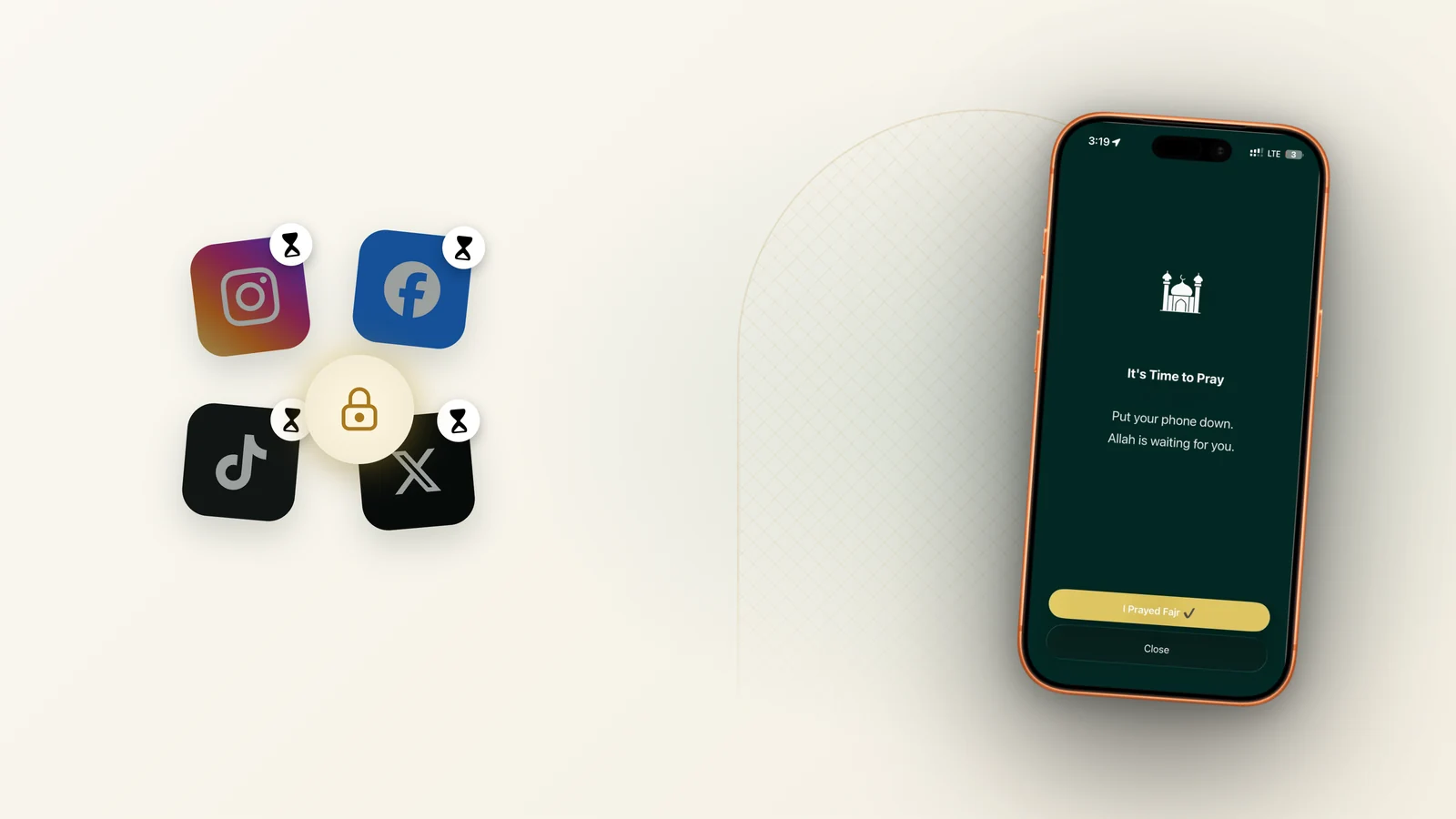
Senior iOS engineer and the founder of Athanify. Over six years he has shipped sixteen apps on the App Store to users in more than fifty countries, with deep work in Apple's Screen Time framework, payments, encryption and on device AI. He built Athanify on his own, from the first sketch to launch, and writes here about praying well in a world full of screens.