How Muslims Kept Prayer Time Before Clocks
Long before the phone in your pocket, the sun, a shadow and a brass instrument told Muslims when to pray. Here is how it was done.

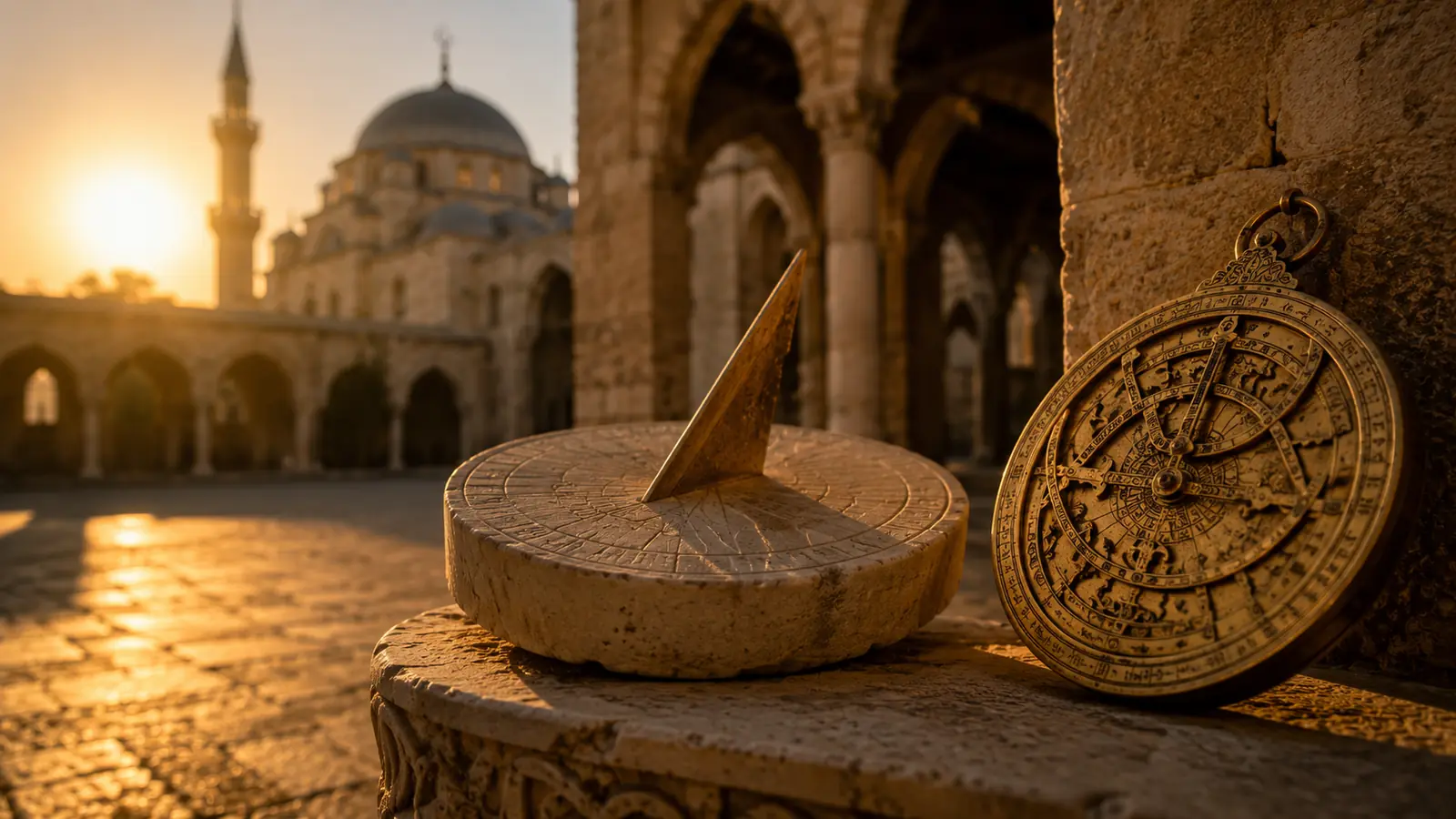
Reach for your phone today and the five prayer times appear in an instant, worked out to the minute for the exact spot you are standing on. It is easy to forget that for almost all of Islam's history there were no clocks, no printed timetables, and certainly no apps. And yet Muslims prayed on time, five times a day, across deserts and cities and centuries. The question is simple, and the answer is beautiful. How did they know? They read the sky.
The sun was the first clock
Islam tied prayer to the movement of the sun from the very beginning, and that was no accident. The sun is a clock that hangs over every person on earth, free and impossible to lose. Fajr arrives with the first true light of dawn. Dhuhr begins the moment the sun passes its highest point and starts to descend. Asr is read from the length of a shadow. Maghrib is the instant the sun slips below the horizon. Isha comes once the last red glow of dusk has gone. Every one of these is something you can see with your own eyes, which meant that anyone, anywhere, with no instrument at all, could know when it was time to pray.
The shadow and the stick
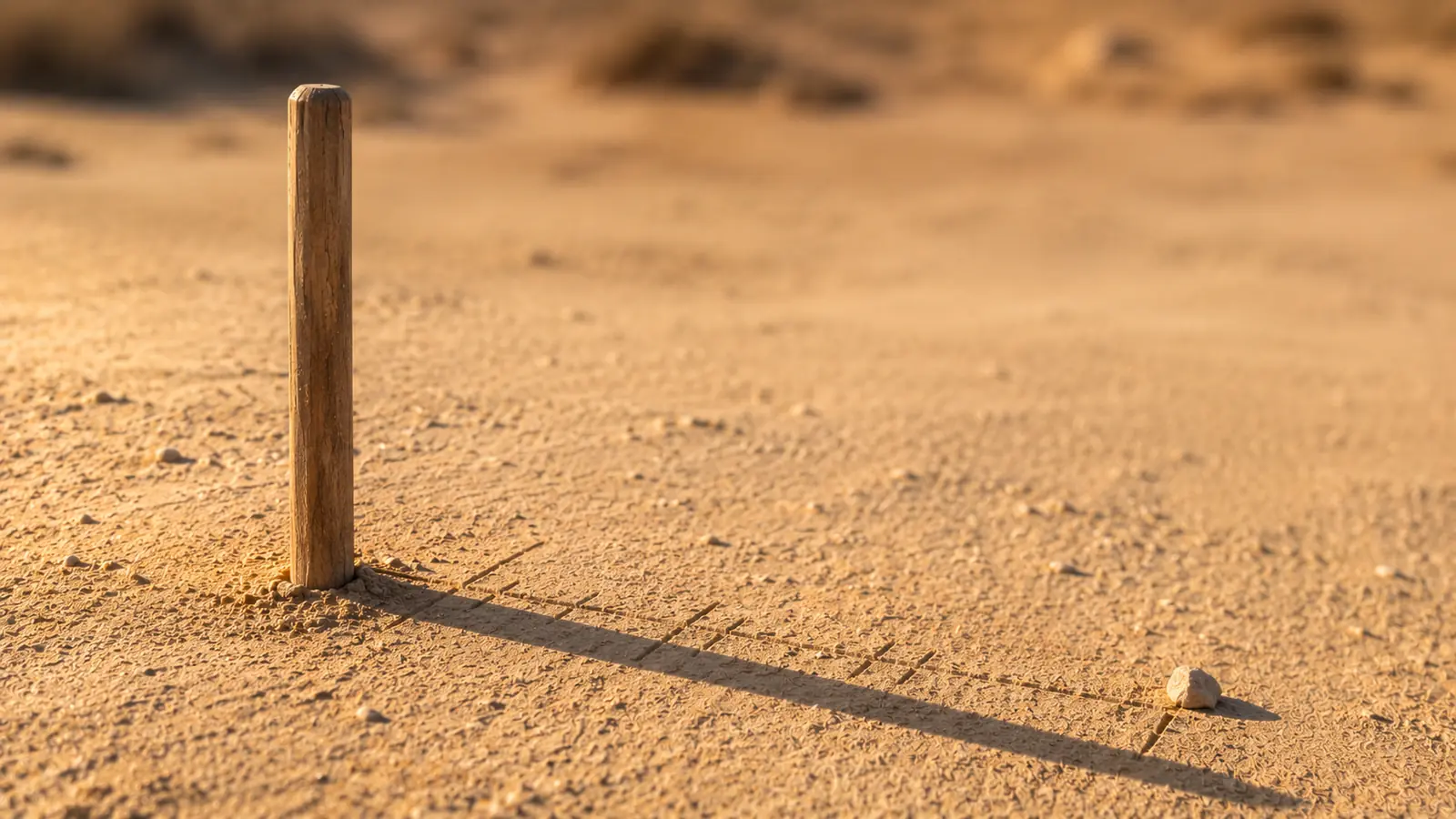
The simplest tool was a stick. Plant an upright rod in open ground, the kind astronomers call a gnomon, and its shadow becomes a hand sweeping across the day. At dawn the shadow stretches long to the west. It shrinks toward midday, and the moment it stops shrinking and starts to grow again marks the sun's peak and the beginning of Dhuhr. This is also why Asr is defined the way it is. The Prophet, peace be upon him, tied it to the moment an upright object's shadow grew to equal its own length, and the schools differ on whether it begins then or once the shadow reaches twice that length. A shepherd in a field and a scholar in a city were measuring the very same thing in the very same way, by watching a shadow lengthen on the ground.
The science of the muwaqqit
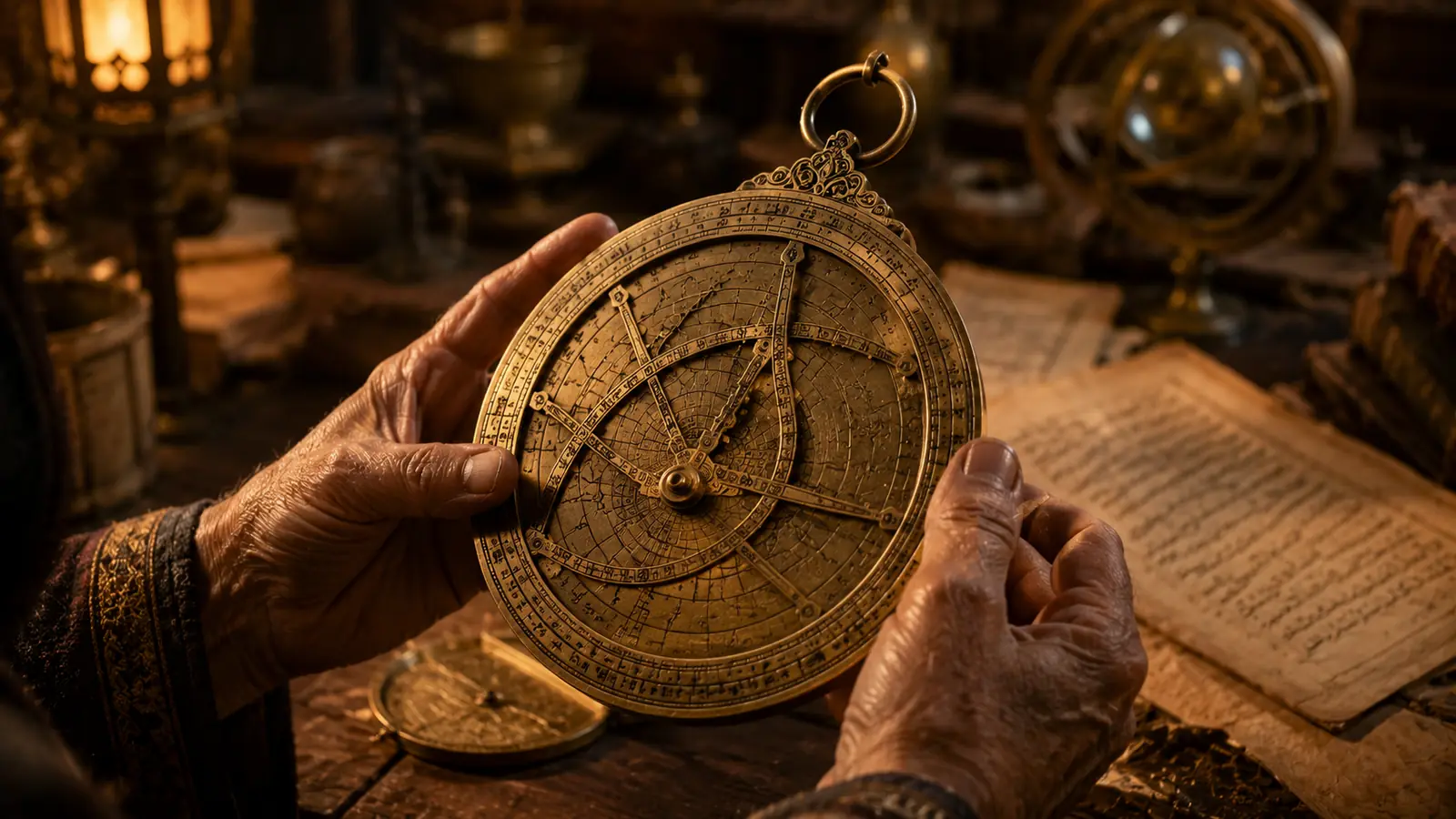
As Muslim civilisation grew, telling time became a science of its own, with a name of its own: ilm al-miqat, the science of timekeeping. Great mosques employed a specialist called the muwaqqit, an astronomer whose entire job was to determine the prayer times and the direction of the Qibla with precision. They worked with the astrolabe, an exquisite brass instrument that held a model of the sky in the palm of a hand and could fix the time from the height of the sun or a star. Scholars like al-Biruni measured the size of the earth itself, and Ibn al-Shatir, a muwaqqit at the Umayyad Mosque in Damascus, built a celebrated sundial and astronomical tables that were studied for generations. The same calculations your app now runs in a fraction of a second were once the life's work of these men.
The muezzin and the minaret
Knowing the time was only half the task. The other half was telling everyone. Once the muwaqqit confirmed the moment had arrived, the muezzin climbed the minaret and gave the adhan, his voice carrying the news across the rooftops to every home and shop within earshot. The minaret was never just decoration. It was the loudspeaker of its day, raised high so that a single human voice could reach a whole quarter of a city. For most Muslims through history, the call from the minaret, and not a glance at a clock, was how they knew it was time to stop and turn to prayer.

From sundial to smartphone
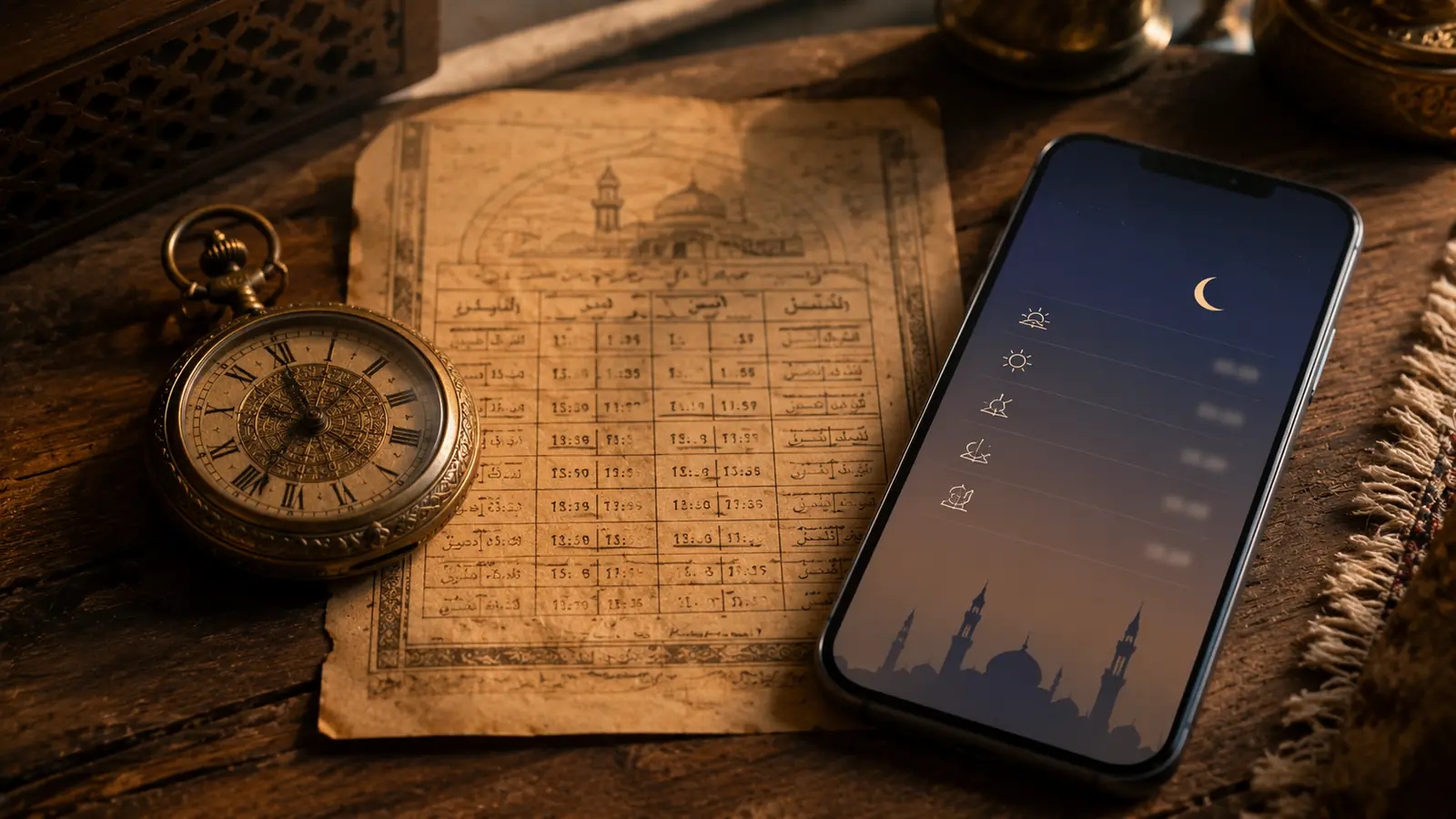
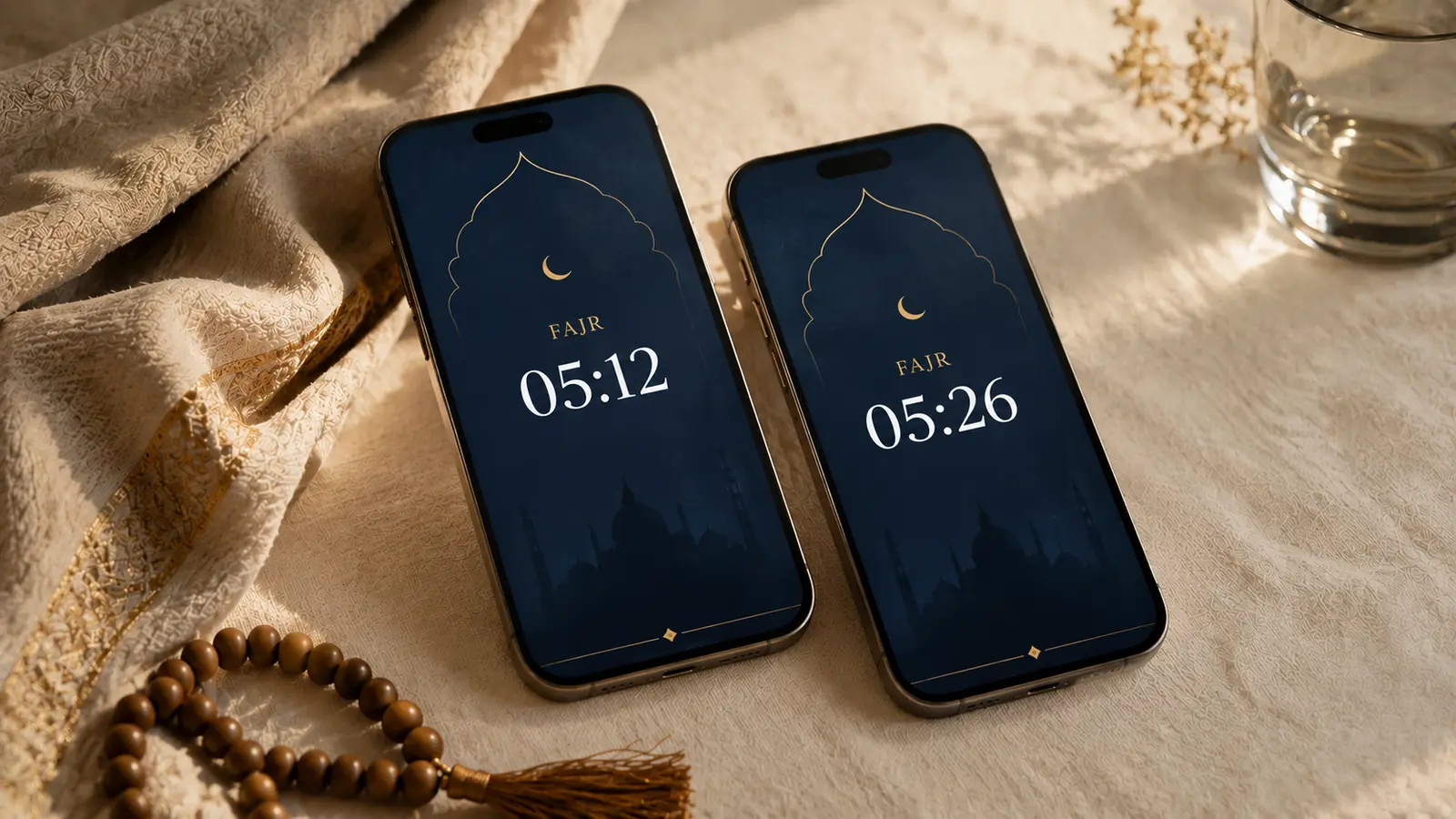
The mechanical clock changed the habit slowly. As clocks spread, mosques began posting printed prayer timetables, the taqwim, so a glance at the wall could replace a glance at the sky. Radio carried the adhan into homes. Then the calculations that once filled a muwaqqit's notebooks were written into software, and the whole of ilm al-miqat shrank to fit inside the phone in your pocket. What feels like a modern convenience is really an old science wearing new clothes. Your app is doing exactly what the astrolabe did, predicting the sun's position, only faster, and the small disagreements between apps come down to the same choices those early astronomers once debated. That is a story of its own, of why two apps can land on a different minute.
The sky is still the clock
There is something worth holding on to in all of this. When you glance at the prayer time on your screen, you are the latest link in a chain that runs back through the printed timetables, the astrolabes and the shadow sticks, all the way to a companion watching the horizon for the first light of dawn. The technology has changed beyond recognition. The thing it points to has not moved at all. The sun still rises, the shadow still lengthens, and the call still goes out, five times a day, exactly as it always has.
The tool keeps changing. The sun does not.
Common questions
How did Muslims know prayer times before clocks?
By the sun. Each prayer is tied to a visible event in the sky: the first light of dawn for Fajr, the sun passing its peak for Dhuhr, the length of a shadow for Asr, sunset for Maghrib, and the fading of twilight for Isha. A simple upright stick and its shadow were often enough to read the time.
What is a muwaqqit?
A muwaqqit was a mosque astronomer whose job was to determine the prayer times and the direction of the Qibla with precision, using instruments such as the astrolabe and the sundial. The role existed for centuries as part of ilm al-miqat, the Islamic science of timekeeping.
What is an astrolabe and how was it used for prayer?
An astrolabe is a brass instrument that models the positions of the sun and stars. By measuring the altitude of the sun by day or a star by night, a user could work out the time, which made it one of the key tools for fixing prayer times before mechanical clocks existed.
 Conclusion
The method changed, the discipline did not
For most of Islamic history, knowing when to pray meant reading a shadow, an astrolabe, or the sky itself. The muwaqqit was a serious scholarly post, and the astronomy developed to serve prayer times fed directly into the wider scientific tradition.
What your phone does now is the same calculation, performed faster and without you having to learn it. That is genuinely a gift. But it is worth remembering that the precision was never the point. Centuries of Muslims prayed on time with a stick in the ground, because the discipline was in the person, not the instrument.


Keep reading
Senior iOS engineer and the founder of Athanify. Over six years he has shipped sixteen apps on the App Store to users in more than fifty countries, with deep work in Apple's Screen Time framework, payments, encryption and on device AI. He built Athanify on his own, from the first sketch to launch, and writes here about praying well in a world full of screens.